










The gardener’s calendar - June: your guide to a lush, flower-filled summer garden
June is when everything comes together: you have the longest days, temperatures are rising, and the garden treats you to an explosion of scents and colours. June is the perfect month to enjoy all that fresh greenery, but it is also a crucial transitional month. Around 21 June – the longest day of the year – many plants and hedges experience a significant growth spurt.
To ensure your lawn doesn’t turn yellow, your hedges retain their neat shape and your vegetable garden produces a bountiful harvest, a targeted approach is needed. With this practical gardening calendar for June, we’ve listed the most important gardening tasks for this month.
The ornamental garden: Pruning for the longest day and deadheading flowers
June is a busy month for the pruning shears. Many plants have finished their first period of vigorous growth, making this the perfect time to take action.
Finish trimming the hedges by 21 June
Do you have a beech hedge, privet, cherry laurel or yew in your garden? June is the traditional month for getting these hedges back into shape. It is best to schedule this job before the summer solstice (21 June). The strongest spring growth will have passed by then, meaning the hedge will retain its neat shape for much longer and you will only need to give it a light trim later in the autumn.

Pruning tip from Marcel
Never trim hedges on a sweltering, sunny day. The leaves, when suddenly exposed to the bright sun, can burn very quickly, resulting in brown edges. It is better to choose a cloudy day or to trim them in the late afternoon.
Pruning early-flowering roses and caring for roses
Early-flowering shrubs such as lilacs or early-flowering perennials (such as cranesbill or Campanula) finish flowering in June. By cutting them back heavily straight away, you encourage the plant to produce new shoots. You will often be rewarded with a beautiful second flush of flowers later in the summer!
For roses, which are now at the peak of their flowering, it is advisable to systematically remove spent flowers. Cut them off just above the first ‘five-leaf’ (a side shoot with five leaflets). A vigorous new shoot will soon grow from this. As flowering takes energy, it is best to give rose bushes some extra rose nutrition at the end of this month.
Discover our pruning tools


Your lawn in the summer heat: Mowing and watering
In June, the lawn requires a completely different approach to that needed in the mild spring. With the increasing heat and intensity of the sun, the risk of the grass drying out is ever-present.
Adjust the cutting height upwards
Whereas you might have mowed the grass short in spring to achieve a neat, even surface, in June it’s best to set your lawnmower or robot mower to a slightly higher setting. Mow play areas to a minimum of 4 centimetres and ornamental lawns to around 3 centimetres.
Is a hot, dry spell on the way? If so, feel free to let the grass grow to 5–6 centimetres. Longer grass casts shade over the soil and its own roots, which means moisture evaporates more slowly and the turf is much less likely to turn yellow. It’s also best to mow at the end of the day; freshly mown grass is delicate and will dry out immediately in the midday sun.
Smart watering: Encourage the roots to grow deeper
During a drought, it’s best not to water your lawn a little bit every day. This keeps the moisture on the surface and encourages the grass to develop shallow roots, which makes the turf even more vulnerable. Instead, water thoroughly once every 4 to 5 days (for example, for an hour). This allows the water to sink deep into the soil and forces the grass roots to dig deeper in search of moisture. Always water early in the morning or late in the evening to prevent evaporation.
The vegetable garden in June: Sowing, thinning and protecting
A wonderful time of year is upon us in the vegetable garden: the first early strawberries, radishes and leafy greens are ready to be harvested. But there’s also work to be done to prepare for the next harvests.
Sow directly into the ground
Now that the risk of night frost has completely passed, there’s virtually no need to start seeds indoors anymore. Green beans, sweetcorn, courgettes, pumpkins and winter lettuce can be sown directly into the ground. To avoid a massive ‘harvest peak’, it’s best to sow fast-growing crops such as lettuce and radishes in small batches every two weeks. That way, you can enjoy fresh leaves all summer long.
Removing axillary shoots with tomatoes and protecting the fruit
Tomato plants shoot up in June. Tie the main stem to a sturdy stake regularly. Also, check the leaf axils weekly for ‘axillary shoots’ (young, unwanted shoots) and pinch these off with your fingers. This prevents the plant from becoming an impenetrable tangle of leaves, ensuring all its energy goes directly into developing plump, juicy tomatoes. Do you have strawberry or berry bushes? Lay a layer of straw under the strawberries to prevent the fruit from rotting on the damp ground. Also, make sure to stretch a fine-mesh bird net over your soft fruit in good time, as blackbirds and magpies are often just a step ahead of you!
Managing summer pests in an environmentally friendly way
Unfortunately, the June heat also attracts unwanted guests. Fortunately, there are plenty of effective, environmentally friendly ways to deal with many pests.
How to effectively spray away aphids
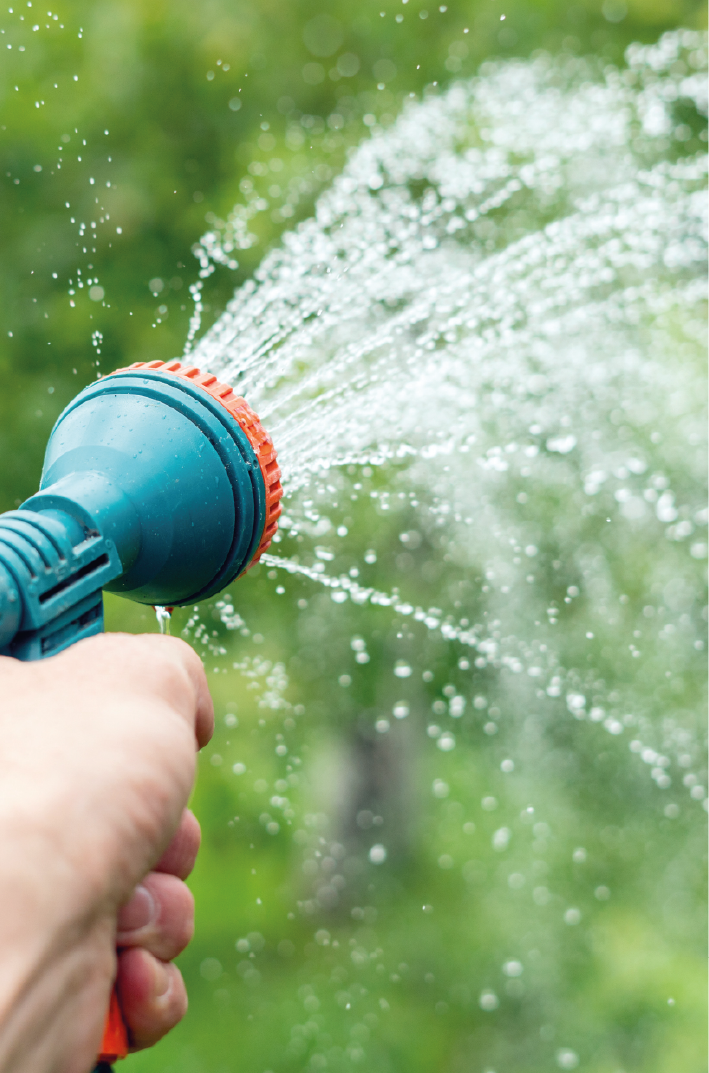
Roses, young vegetable plants and lilacs are often attacked by colonies of aphids in June. Have you spotted the first signs of an infestation? Don’t reach for chemical pesticides straight away; simply blast the aphids away with a powerful, focused jet of water from your garden hose. Repeat this every 3 to 4 days to ensure you also get rid of any newly hatched eggs. Also, encourage natural predators such as ladybirds and hoverflies in your garden; they love aphids and will clear up the leftovers for you for free.
Be on the lookout for the box tree moth and the cabbage white butterfly
- Box tree moth: Check your box trees weekly for webs and young, bright green caterpillars. Hand-picking works well in a small garden. In the event of a larger infestation, you can use biological control with nematodes or set up a funnel trap.
- Cabbage White: The caterpillars of the cabbage white butterfly can strip your young cabbages, palm kale and Chinese cabbage bare in just a few days. Prevent the butterflies from laying eggs by stretching a fine insect net over the cabbage patch. You should also regularly check the undersides of the cabbage leaves for small, yellow eggs and rub them off by hand.
View all nematodes and natural enemies


Handy checklist: Your gardening calendar for June
| Garden Zone | To Do | Why? |
| Ornamental garden | Prune hedges back sharply | Pruning before 21 June ensures a neat, long-lasting result. |
| Ornamental garden | Cut off wilted flowers | Encourages a rapid second flowering in roses and perennials. |
| Lawn | Set the cutting height to 4 to 6 cm | Protects grass roots from the scorching sun and prevents yellowing. |
| Lawn | Water thoroughly every 4–5 days | It encourages the grass to develop deep roots and makes the turf drought-resistant. |
| Vegetable garden | Pruning and staking tomatoes | Direct the flow of sap towards the fruit rather than excess foliage. |
| Vegetable garden | Insect netting over brassicas | Prevents caterpillars from completely devouring your crop. |
| Fruit | Laying straw under strawberries | Keeps the fruit dry and prevents mould and fruit rot. |
Get to know more about gardening in these blogs 👇
More info? Receive all our gardening tips directly in your mailbox!
We'll only email you handy facts, green advice and our best promotions & discounts. You'll receive it about once a week and you can unsubscribe at any time. No spam, promise 🤞